
EU PPWR in 2027: what Indian online sellers who ship to Europe should know
If you sell from India to customers in Europe, through your own website or a global marketplace, you have probably heard of the PPWR by now. Most of what I read about it makes it sound like a wall coming down in 2027.
It is not.
Here is the short answer. The EU Packaging and Packaging Waste Regulation, Regulation (EU) 2025/40, has applied since 12 August 2026. No new obligation for packaging suppliers or exporters starts in calendar year 2027. What happens in 2027 is that the European Commission writes the detailed rules, and those rules bite from 2028 and 2030. So 2027 is your preparation year.
We export packaging from Jaipur to 20+ countries, so I follow these rules closely. I have linked the official documents of the European Commission so you can check every date.
What already applies since 12 August 2026?
According to the Commission's news release of 11 August 2026 and its guidance on the regulation (March 2026), a few things are already live:
- Heavy metals. The total of lead, cadmium, mercury and hexavalent chromium in packaging must not exceed 100 mg/kg.
- PFAS in food-contact packaging. From 12 August 2026, food-contact packaging above the set PFAS limits cannot be placed on the EU market.
- Recyclability. All packaging placed on the market must be recyclable. Until the detailed EU method arrives, this is judged under the older rules and standards.
- Producer duties. Whoever counts as the "producer" in an EU country must register and report there under the EPR scheme of that country.
Packaging already placed on the market before 12 August 2026 does not have to be withdrawn.
Am I the "producer" if I ship to EU customers from India?
This is the point most Indian sellers miss.
If you sell directly to end users in an EU country, the regulation treats you as the producer in that country, even though you are based outside the EU. The Commission guidance says it plainly: the distance seller is the producer, and online platforms must check EPR compliance.
If you sell B2B to an importer or distributor in the EU, that company usually becomes the producer. Your job is to give them correct information about your packaging.
Each EU country may also require a non-EU producer to appoint an authorised representative there. This depends on the country. The EU is discussing changes to this duty for smaller producers, but as of October 2026 nothing has been adopted, and the proposal keeps non-EU producers in scope.
So in 2027, if you ship direct to EU consumers, check the EPR registration rules of each country you sell into. Some marketplaces and compliance agents offer this as a service.
What does the EU decide during 2027?
Mostly rules that will apply later. From the deadlines in the regulation itself, as listed in the Commission guidance and its PPWR implementation timeline:
| Due date | What the Commission must do |
|---|---|
| 12 February 2027 | Ask European standards bodies for standards on packaging weight, volume and empty space |
| 12 February 2027 | Publish guidelines on the single-use packaging formats that are banned from 2030 (Annex V) |
| 12 February 2027 | Set the minimum number of rotations for reusable packaging |
| 30 June 2027 | Set calculation rules for the reuse targets |
| Calendar year 2027 | The first year of data that EU countries report under the PPWR, in 2028 |
None of these is a direct duty on you. But the standards on empty space and the Annex V guidelines will tell you exactly what your packaging will need to look like by 2030.
What comes after 2027?
These are the later dates I would plan around:
- Labels from 12 August 2028 at the earliest. Packaging will need a harmonised EU label showing what it is made of. The exact design comes in a separate act, so do not print anything yet.
- Design for recycling from 2030 at the earliest. Packaging will be graded A to D, and EPR fees will depend on the grade.
- Empty space from 2030 at the earliest. For grouped, transport and e-commerce packaging, the empty space in the box must not be more than 50%.
- Recycled content in plastic packaging from 2030 at the earliest. Recycled plastic made outside the EU will count only if it meets EU-equivalent standards, under rules the Commission is still writing.
- Bans on certain single-use plastic formats, listed in Annex V, from 1 January 2030.
Why does the empty space rule matter so much for online sellers?
Because the EU counts paper fill and air pillows as empty space.
We make void fill paper, so you might expect me to say "just add more paper". The rule says the opposite. Filling a big box with paper does not reduce its empty space. Only a smaller box does.
This is the rule of the trade I would follow even if you never ship to Europe. Right-size the box first, then use only enough wrap and fill to stop the product moving. It saves courier charges in India too. Our void fill guide shows a simple way to check how much empty space your box has.
What should I do in 2027 if I ship to Europe?
- List every EU country you sell into, and find out whether you are the producer there.
- Register with the EPR scheme of each country where required, or confirm that your marketplace or importer covers it.
- Ask your packaging suppliers what each material is made of. Keep it in writing.
- Measure the empty space in your three most-used export boxes. Change any box that is more than half empty.
- Move to single-material packs where you can, for example a paper carton with kraft paper tape and honeycomb paper inside.
- Do not print EU labels until the label act is published.
What are we doing at JPPL?
We make BOPP tape, honeycomb paper, void fill paper and padded paper mailers in our own plant in Jaipur, and we export to 20+ countries. I will be honest: some of the EU acts that were due by the end of 2026 were still not published when I wrote this, so parts of the picture are still unclear for us too.
The PackSmith store delivers across India. If you are an exporter and need packaging for EU orders, write to us with your box sizes and destinations.
Questions sellers ask us
Does the PPWR apply if I sell only within India?
No. It applies to packaging placed on the EU market. If none of your parcels go to the EU, India's own Plastic Waste Management Rules are the ones to follow.
Do I need the new EU packaging label in 2027?
No. The harmonised label applies from 12 August 2028 at the earliest, and its design is not final yet.
Is paper packaging exempt from the PPWR?
No. The PPWR covers all packaging materials, including paper. Paper is simply easier to make recyclable, and it is outside the plastic-only rules such as recycled plastic content.
Products in this guide
Prices include 18% GST. Free delivery across India on every order.
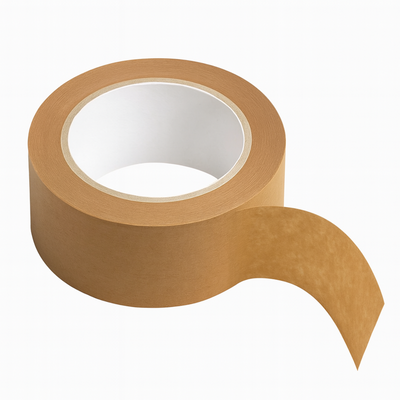 Kraft Paper Tape 48 mm x 50 m, Self-Adhesive
From ₹349 incl. 18% GST3 pack optionsView & buy
 Honeycomb Paper Roll 390 mm Available in Multi Color and Size
From ₹339 incl. 18% GST
 Void Fill Paper Sheets 380 x 250 mm (15 x 10 inch), Brown, Pack of 500
₹1,649 incl. 18% GSTView & buy


