

Case study: an online bookshop packing with kraft bubble sheets
A person who buys books online checks two things before reading the first page: the corners and the spine. A dented corner on a new novel is not a broken product. To a book lover, though, it is a damaged one, and an independent bookshop lives on those book lovers coming back.
This is a worked example. The business is illustrative, put together from situations small sellers commonly face. The product details and the maths are real.
So here is my short answer. If I were packing for this bookshop, I would wrap every book in kraft paper bubble sheets, 300 x 400 mm, and change only the outer layer by order type. A single paperback goes in a courier bag. Two or more books go in a lined carton. In the monsoon months, the cartons get a plastic outer too, because paper alone does not keep water out.
Who is the seller, and what is going wrong?
The example business is an independent online bookshop in Kochi, run by two people from a rented room. It sells new fiction and non-fiction, Malayalam and English titles, and a shelf of collectible hardcovers. It ships about 250 orders a month, through its own website, Instagram and WhatsApp.
Today the books go out wrapped in old newspaper, taped, and then put in whatever bag or box is at hand. Three complaints keep coming in.
- Dented corners, mostly on single paperbacks sent in a thin bag.
- Grey marks on pale covers. Newsprint ink can rub off onto a cover under pressure.
- Wavy, wet edges after rainy weeks. Kochi has a long and heavy monsoon.
The shop also looks less professional than it is. A collector's hardcover wrapped in yesterday's newspaper does not feel like a gift, even when it is one.
What did they compare before choosing?
| Option | Good at | Weak at | My verdict |
|---|---|---|---|
| Newspaper and tape, as today | Free | Ink marks, no corner protection, looks cheap | Stop |
| Plastic bubble wrap | Cushioning and water | Plastic, slow to cut and tape for each book | Fine for heavy box sets only |
| Padded paper mailer | One step, plastic-free | Best for one or two books, weaker in heavy rain | Good for single books in the dry months |
| Kraft paper bubble sheets | Cut to size, paper, clean on covers | Not waterproof on their own | The main wrap, with the right outer layer |
I want to be fair to the mailer here. We sell both mailers and sheets, so I have no reason to push one.
For a single paperback in a dry month, a padded mailer is quicker than a sheet plus a bag. If this shop shipped only single books from a dry city, I would tell them to use mailers and skip the sheets. Our padded paper mailer packing guide covers that route. But this shop sends many multi-book orders, and it ships from Kochi.
We sell our kraft paper bubble wrap sheets cut to 300 x 400 mm, in packs of 20, 50 and 200. They are kraft paper with a raised bubble pattern, and they go out with paper waste after use. For what they protect well and where they fall short, read our kraft paper bubble sheets guide. This case is about one shop's monthly routine.

How should each kind of order be packed?
A single paperback: one sheet, then a courier bag
A common Indian paperback is about 21.6 x 14 cm and 2 cm thick. One sheet wraps a book when twice its width plus twice its thickness, plus about 3 cm of overlap, stays within 40 cm, and its length plus thickness stays within 30 cm.
Here that is 2 x 14 + 2 x 2 + 3 = 35 cm, and 21.6 + 2 = 23.6 cm.
One sheet is enough.
- Lay the book on the sheet, bubbles facing the book.
- Fold the long sides over and fold the ends under, like a gift. Pay attention to the four corners.
- Put the invoice on top.
- Slide it into a 10x12 inch tamper-proof courier bag. The wrapped book is about 9 x 6 x 1 inches. Add the thickness plus 1 inch to both sides and you need about 8 x 11, which an 8x10 bag cannot take.
- Seal the strip and press along its full length.
The sheet softens knocks on the corners, and the bag keeps rain out.
Neither one alone does both jobs.
Two to four books: a lined and layered carton
Books are heavy for their size but not fragile. Delhivery's packaging guidelines (updated November 2024) suggest a 3-ply corrugated box for products under 4 kg that are not fragile, and 5-ply above 4 kg. Two to four paperbacks stay well under that.
- Lay one sheet flat on the floor of the carton.
- Stack the books square, with a sheet between each one so the covers do not rub.
- Put one sheet on top.
- Fill any gaps with crumpled plain paper. Do not crumple bubble sheets for fill, because plain paper does that job for less.
- Close the box and shake it. If the books move, add paper.
For three books, that is 4 sheets. For two, it is 3.
Hardcovers, box sets and collector copies
A hardcover of about 24 x 16 x 3.5 cm needs 2 x 16 + 2 x 3.5 + 3 = 42 cm of sheet. That is over 40, so use two sheets with a few centimetres of overlap. For a collector copy, I would also put a piece of stiff card on each face before wrapping, so the boards cannot bend. Then pack it in a carton like the multi-book orders.
What changes in the monsoon?

Paper and water do not get along. I will not pretend a kraft sheet survives a soaked courier van.
Single paperbacks are already covered, because they travel in a sealed courier bag. For cartons, the shop has two choices in the wettest months. It can slide each carton into a courier bag, or accept some risk. A carton for three paperbacks is about 24 x 17 x 10 cm, or 9.4 x 6.7 x 3.9 inches. With the thickness plus 1 inch added, it needs about 11.6 x 14.3, which fits a 12x16 bag. Delhivery's same guide notes that polybags can be used as added protection from external fluids.
This adds plastic to the parcel.
I think that is the right call for a Kochi bookshop in July. In the dry months, it can drop the outer bag again.
One more point for book sellers. India Post withdrew its old Book Post service in December 2024, as The Wire reported. India Post's separate Gyan Post service covers only certain kinds of books, from 300 g to 5 kg, and its page says these packets are subject to inspection by post office staff. If the shop uses it, it should ask at the counter how the packet must be closed before sealing anything.
The numbers: sheets, bags and when to reorder
Assume the 250 orders split like this: 140 single paperbacks, 75 orders of two to four books and 35 hardcovers or box sets. Take your own split from last month's sales.
| Order type | Orders a month | Sheets per order | Sheets a month | Outer layer |
|---|---|---|---|---|
| Single paperback | 140 | 1 | 140 | 10x12 courier bag, 140 a month |
| Two to four books | 75 | 3 to 4, about 3.5 on average | about 263 | 3-ply carton, plus a 12x16 bag in the monsoon |
| Hardcover or box set | 35 | 2 to 3, about 2.5 on average | about 88 | Carton, plus a 12x16 or 14x18 bag in the monsoon |
| Total | 250 | about 490, so about 515 with 5% spare |
So the shop buys 3 packs of 200 sheets a month, which is 600.
The extra 85 or so carry over and cover a busy week.
At about 26 working days, it uses roughly 20 sheets a day. I would reorder when about 200 sheets are left, which is around 10 working days of stock. We dispatch in 1 to 2 working days and delivery is free across India, but the time to reach Kochi depends on the courier, so I would not cut it closer.
We price the pack of 200 much lower per sheet than the smaller packs. See the listing for today's price.
What should the shop watch?
- Weight. A ten-book order can cross 4 kg quickly. Weigh it, and move to a 5-ply carton above that.
- Reuse. Sheets that come back clean and dry from returns can go out again. Keep a box for them.
- Corners. If corner complaints continue on single paperbacks, add a piece of card on each face before wrapping, or move those orders to a small carton.
- The record. Count complaints by type (corner, water, scuff) for 60 days before the change and 60 days after. That tells the shop which part of the setup works, and which part needs to change.
What would it take in your shop?
- Split last month's orders into single books, multi-book orders and large or collector copies.
- Measure your most common book size and check the one-sheet rule above.
- Try the material first. Our free sample listing has a kraft bubble sheet variant at Rs 0, and the pack of 20 is meant for a trial.
- Pack one week of real orders and count the sheets you actually used.
- Decide your monsoon outer layer before the rains, not after the first wet book.
- Set a reorder point of about 10 working days of sheets.
At JPPL we export paper bubble wrap, and the machines that make it, to buyers in the UK, Germany and the USA, so I know this material from the machine side too. Send us the fattest hardcover you sell, by size and weight, and we will tell you how many sheets it needs.
Products in this guide
Prices are before GST. Free delivery across India on every order.
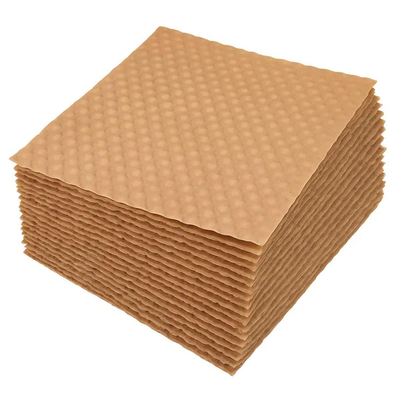 Kraft Paper Bubble Wrap Sheets 300mm x 400mm Eco Friendly Shipping ...
From ₹199 + GST
Kraft Paper Bubble Wrap Sheets 300mm x 400mm Eco Friendly Shipping ...
From ₹199 + GST Courier Bags Tamper Proof | Heavy Duty Plastic Polybags for Safe Sh...
From ₹199 + GST6 pack optionsView & buy
Courier Bags Tamper Proof | Heavy Duty Plastic Polybags for Safe Sh...
From ₹199 + GST6 pack optionsView & buy
 JPPL Packaging Supplies Sample | Bags, Wraps, Cartons & Tapes
₹0 + GST9 pack optionsView & buy
JPPL Packaging Supplies Sample | Bags, Wraps, Cartons & Tapes
₹0 + GST9 pack optionsView & buy


