How to pack glass, ceramics and cosmetics without plastic
A mug does not break because it is made of ceramic. It breaks because it moved inside the box and hit something.
That one idea runs through everything below.
So the short answer is this. You can pack a fragile order with no plastic at all. Wrap each item in two or three turns of honeycomb paper or kraft bubble sheet, give it a bed and walls of crumpled paper, and keep about 5 cm of paper between the item and every side of the box. Then close it only after it passes a shake test.
We have been manufacturing packaging in Jaipur since 1997, and today we sell paper and plastic cushioning side by side. I am not against plastic. This page is simply a practical method, using the materials we stock, with their exact sizes and what we charge for them.
What do you need on the packing table?
Five materials cover almost every glass, ceramic or cosmetics order we are asked about. The prices below are our store prices at the time of writing (October 2026), and delivery is free across India.
| Material | Size on our store | Price (incl. 18% GST) | Its job in the box |
|---|---|---|---|
| Honeycomb paper roll | 390 mm x 10 m | Rs 339 | First wrap around glass, mugs, bottles |
| Honeycomb paper roll | 390 mm x 100 m | Rs 1,099 to Rs 1,199 | Same job, once you pack every day |
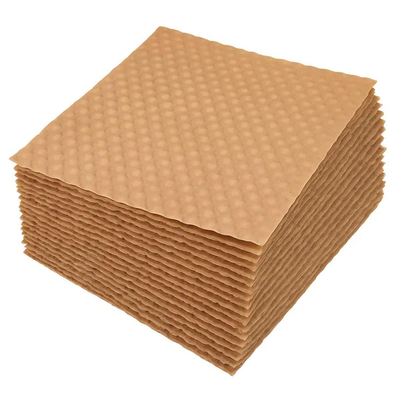
| Honeycomb paper sheets | 390 x 500 mm, pack of 20 | Rs 349 | Pre-cut wrap for low volumes |
| Kraft paper bubble wrap sheets | 300 x 400 mm, pack of 20 | Rs 239 | Second layer, and flat items like palettes and frames |
| Crinkle paper | 500 g | Rs 469 | Bed and top layer in gift boxes |
| Void fill paper | 380 x 250 mm sheets, pack of 500 | Rs 1,649 | Crumpled filler for side gaps |
| Brown kraft paper tape | 48 mm x 50 m, 1 roll | Rs 349 | Sealing the carton |
We usually suggest a small start. The 10 m honeycomb paper roll and a pack of kraft paper bubble sheets are enough to learn the method. You can add the rest once you know your monthly order volumes.
How do you pack a fragile order, step by step?
- Pick a box with room. Measure the product and add about 5 cm on each side. UPS asks for at least two inches (about 5 cm) of cushioning between the item and the corners, sides, top and bottom in its packaging guidelines (PDF, November 2024). Use a firm corrugated box. A tired, reused box with soft corners gives away its protection before the parcel even leaves your city.
- Wrap each item on its own. Pull the honeycomb paper so the cells open up into a mesh. Wrap two or three turns around a glass or bottle, tear it by hand and tuck the end in. The open cells lock into each other, so you do not need tape on the wrap. For a mug, push a ball of paper inside it first and give the handle its own turn. We stock the roll in six colours, which helps if the parcel is a gift.
- Add a second layer where the item is weakest. A kraft bubble sheet over the honeycomb works well for flat things that crack across the middle: an eyeshadow palette, a compact mirror, a photo frame.
- Make a bed. Put about 5 cm of tightly crumpled paper or crinkle paper in the bottom of the box.
- Centre the item and fill the walls. Crumple the void fill paper hard, into fist-sized balls, and push it into the gaps on all four sides. Loose paper flattens in transit.
- Cover the top and do the shake test (more on this below).
- Seal and label. We suggest closing the box with kraft paper tape, one strip along the centre seam, running a few centimetres down each side. Put the invoice inside on top of the fill, and stick the shipping label flat on the top face, not over the tape seam.
One honest note on step 5. The same UPS guide describes crumpled kraft paper as void fill for "lightweight, non-fragile items". I agree with them. Crumpled paper stops movement, but the wrap from steps 2 and 3 is what protects the glass.
What is the shake test, and why does it matter more than the material?
Close the flaps without tape. Hold the box in both hands and shake it firmly up and down, then side to side, then tilt it corner to corner.
Listen. Any clink, slide or knock means something is moving. Open it, find the gap you felt and add more fill there.
Repeat until the box feels like one solid block.
It takes about ten seconds and needs no special equipment. I would trust it over any brand name on the wrap, because it is the one check that finds movement before the courier does.
Crinkle paper or void fill paper: which goes where?
Crinkle paper looks lovely when the customer opens a gift box. It is also springy and light, so it does not hold a heavy item in place very well.
My suggestion is to use both.
Keep tightly crumpled void fill on the sides, where the weight pushes, and put a layer of crinkle paper on top, where the customer sees it first. We sell it in 500 g and 1 kg packs, and 500 g goes a long way as a top layer. A heavy glass jar sitting only in crinkle can settle to the bottom on a long trip, say Jaipur to Guwahati.
Where does paper packaging fall short?
Paper has three real limits, and I would rather you hear them from us than from an unhappy customer.
- Paper does not stop a leak. If a serum or perfume cap loosens, the liquid soaks the wrap, the box and sometimes the label. Put a strip of paper tape over the cap. For thin liquids, a small sealed inner bag is still the safer choice, and that bag is plastic. One small bag is better than losing the whole order.
- Wet routes hurt paper. Paper loses strength when it is soaked, and we cannot change that chemistry. Store your rolls dry, away from the floor and walls, especially in the monsoon. For routes where boxes sit out in the rain, plastic bubble wrap or air cushions still do the job better.
- Very heavy items need more. A full dinner set or a large glass vase is beyond what a few turns of paper can hold. We compare the two honestly in honeycomb paper vs bubble wrap.
One more small thing. Our fragile print tape is BOPP, i.e. plastic. If you want a box with zero plastic, write FRAGILE with a thick marker on the kraft paper tape instead. It works, and the delivery boy reads it exactly the same way.
For the sealing side of the box, I have compared kraft paper tape and BOPP tape on cost per metre and grip.
Questions sellers ask us
Which should I buy first, honeycomb paper or kraft bubble sheets?
If I could buy only one, I would buy the 10 m honeycomb roll, which we list at Rs 339. It wraps round and irregular shapes well, and you tear it to exactly the length you need. Kraft bubble sheets are the better second purchase if you ship flat items.
What will my customer do with all that paper?
Honeycomb wrap, kraft bubble sheets, crinkle and void fill are all paper. Your customer can flatten the carton and send everything out together with the household raddi. A small line on your invoice saying so is a nice touch.
How do I know my packing works before customers complain?
Pack one order exactly the way you plan to ship it. Send it to a friend or relative in another city and ask them to open it on a video call. That one parcel will teach you more than this page can.
Products in this guide
Prices include 18% GST. Free delivery across India on every order.